Smart Bed vs Traditional Bed: Is It Worth the Investment?

Introduction – Why Choosing the Right Bed Matters
Sleep is not a luxury — it is a necessity. The quality of your sleep affects your energy, mood, health, and productivity. That’s why choosing the right bed is one of the most important lifestyle investments you can make.
Today, consumers are faced with a new question: Should I stick with a traditional bed, or invest in a smart bed? With the growth of smart home technology, the debate is no longer about price alone — it’s about value, comfort, and long-term health benefits.
What Is a Smart Bed?
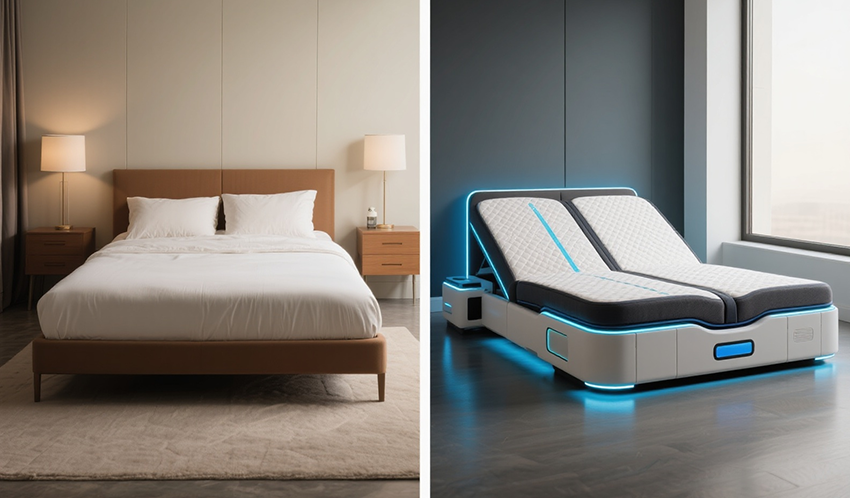
A smart bed is more than just a place to sleep. It is a technology-driven bed system that adapts to your body and environment.
Key Features Include:
-
Adjustable positions for head, foot, and zero gravity modes
-
Sleep tracking with pressure and motion sensors
-
Massage functions for circulation and relaxation
-
IoT connectivity with apps, voice assistants, and lighting systems
Related Terms:
-
Smart mattress – focuses on tracking sleep and adjusting firmness
-
Adjustable bed – emphasizes motorized positioning
-
Nursing bed – designed for healthcare, rehabilitation, and elderly care
What Is a Traditional Bed?
A traditional bed usually consists of a static frame and a mattress. While it provides basic comfort, it lacks adaptability and technology integration.
Common Limitations:
-
Fixed posture support, which may not suit everyone
-
No feedback on sleep quality or health
-
No connectivity with modern smart home systems

Key Differences Between Smart Beds and Traditional Beds
Comfort & Adjustability
-
Smart Bed: Multi-motor systems adjust the head and foot, offering personalized comfort.
-
Traditional Bed: One fixed posture, regardless of individual needs.
Health Benefits
-
Smart Bed: Promotes spinal alignment, reduces back pain, helps with snoring and circulation.
-
Traditional Bed: Passive support only; cannot actively improve health outcomes.
Technology Integration
-
Smart Bed: Works with apps, Alexa, Google Home, LED lighting, and even entertainment systems.
-
Traditional Bed: No connectivity or smart features.
Price & Value
-
Smart Bed: Higher upfront cost but long-term benefits for health, personalization, and convenience.
-
Traditional Bed: Lower initial investment, but limited in addressing long-term health and comfort needs.
Who Should Consider a Smart Bed?
Smart beds are not for everyone, but they are highly valuable for specific users:
-
Tech-savvy consumers who want lifestyle upgrades
-
People with back pain, snoring, or mobility challenges
-
Couples who need dual-zone control and customized sleep positions
-
Elderly or patients in nursing or rehabilitation, where adjustable support aids recovery
Challenges and Considerations
While smart beds provide numerous benefits, consumers should be aware of a few challenges:
-
Higher Cost: Smart beds are more expensive than traditional beds.
-
Data Privacy: Sleep tracking involves personal health data.
-
Durability: Advanced systems require long-term maintenance and reliable components.
Conclusion – Is It Worth the Investment?
The answer depends on what you value most:
-
Traditional beds offer basic comfort at a lower upfront cost.
-
Smart beds deliver advanced comfort, measurable health benefits, and lifestyle personalization.
Are Smart Beds Worth the Investment?
Smart Bed Benefits: Better Sleep, Health, and Personalization
Related Article