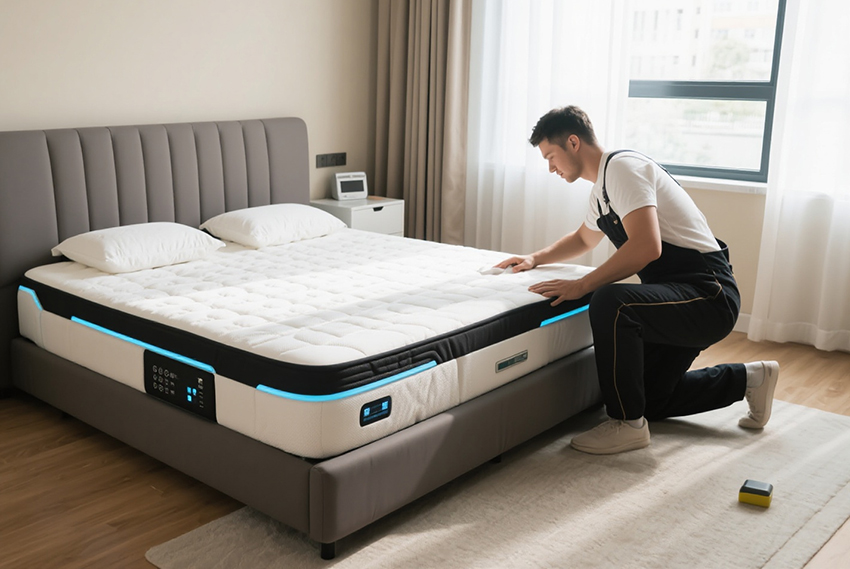
Smart Bed vs Traditional Bed: Which Should You Choose?
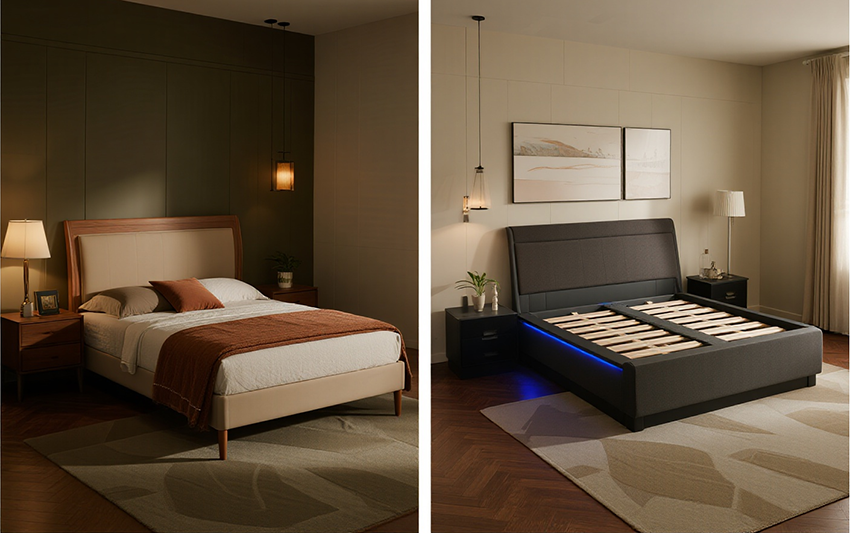
Smart Bed vs Traditional Bed: Which Should You Choose?
The choice between a smart bed and a traditional bed depends on your priorities. If you want advanced comfort, health support, and smart features, a smart bed is worth considering. If you prefer simplicity, affordability, and low maintenance, a traditional bed may suit you better.
What Is a Smart Bed?
A smart bed is a modern bed that uses technology such as sensors, motors, and IoT connectivity to enhance comfort and health.
Core functions include:
-
Adjustable head and foot positions
-
Massage and relaxation features
-
App or voice control, smart home integration
Key difference from traditional beds: Instead of being static, a smart bed adapts to your posture, tracks your sleep, and often integrates with other smart devices.
What Is a Traditional Bed?
A traditional bed usually includes a fixed bed frame and a mattress. It provides basic comfort but does not adapt to the body or environment.
Limitations include:
-
Fixed posture, no adjustability
-
No sleep tracking or health monitoring
-
No integration with modern technology
Smart Bed vs Traditional Bed: Key Differences
Comfort & Adjustability
-
Smart bed: customizable angles (zero-gravity, anti-snore, reading positions).
-
Traditional bed: one fixed sleeping position.
Health Benefits
-
Smart bed: reduces back pain, improves posture, supports circulation, helps with snoring and mild sleep apnea.
-
Traditional bed: only offers basic support; no active health benefits.
Features & Technology
-
Smart bed: integrates with apps, voice assistants, lighting, and even music.
-
Traditional bed: no advanced features.
Cost & Value
-
Smart bed: higher upfront cost ($1,500–$8,000+), but offers personalization and potential long-term health benefits.
-
Traditional bed: much cheaper upfront, but no added features.
Who Should Choose a Smart Bed?
-
People with back pain or posture issues
-
Snorers or sleep apnea patients
-
Couples who want dual-zone control
-
Seniors or people in rehabilitation
-
Tech-savvy users who enjoy smart home setups
Who Should Choose a Traditional Bed?
-
Those on a limited budget
-
People who prefer simplicity and low maintenance
-
Users who sleep well already without adjustments
-
Short-term renters or those who move often

Smart Bed vs Traditional Bed: Which Should You Choose?
-
Choose a smart bed if you want health support, personalization, and smart living.
-
Choose a traditional bed if you prioritize affordability, simplicity, and ease of use.
-
Summary: Smart beds are best for people with health needs or lifestyle upgrades, while traditional beds remain a cost-effective choice for basic comfort.
FAQ – Smart Bed vs Traditional Bed
Q: Are smart beds more comfortable than traditional beds?
Yes. With adjustable angles, massage, and personalization, smart beds offer more comfort options than traditional beds.
Q: Do smart beds help with back pain?
Yes. Adjustable positions align the spine and reduce pressure points, unlike fixed traditional beds.
Q: How much more expensive are smart beds?
Smart beds typically cost $1,500–$8,000+, while traditional beds range from a few hundred to a few thousand dollars.
Q: Do smart beds last as long as traditional beds?
Both last about 8–10 years, but smart beds may require additional maintenance for motors and electronics.
Q: Are smart beds worth it over traditional beds?
For people with health issues or who value smart features, yes. For those on a budget or who prefer simplicity, a traditional bed is enough.
Related Articles
Do Smart Beds Really Improve Sleep Quality?
Are Adjustable Beds Worth Buying in 2025?
Related Article